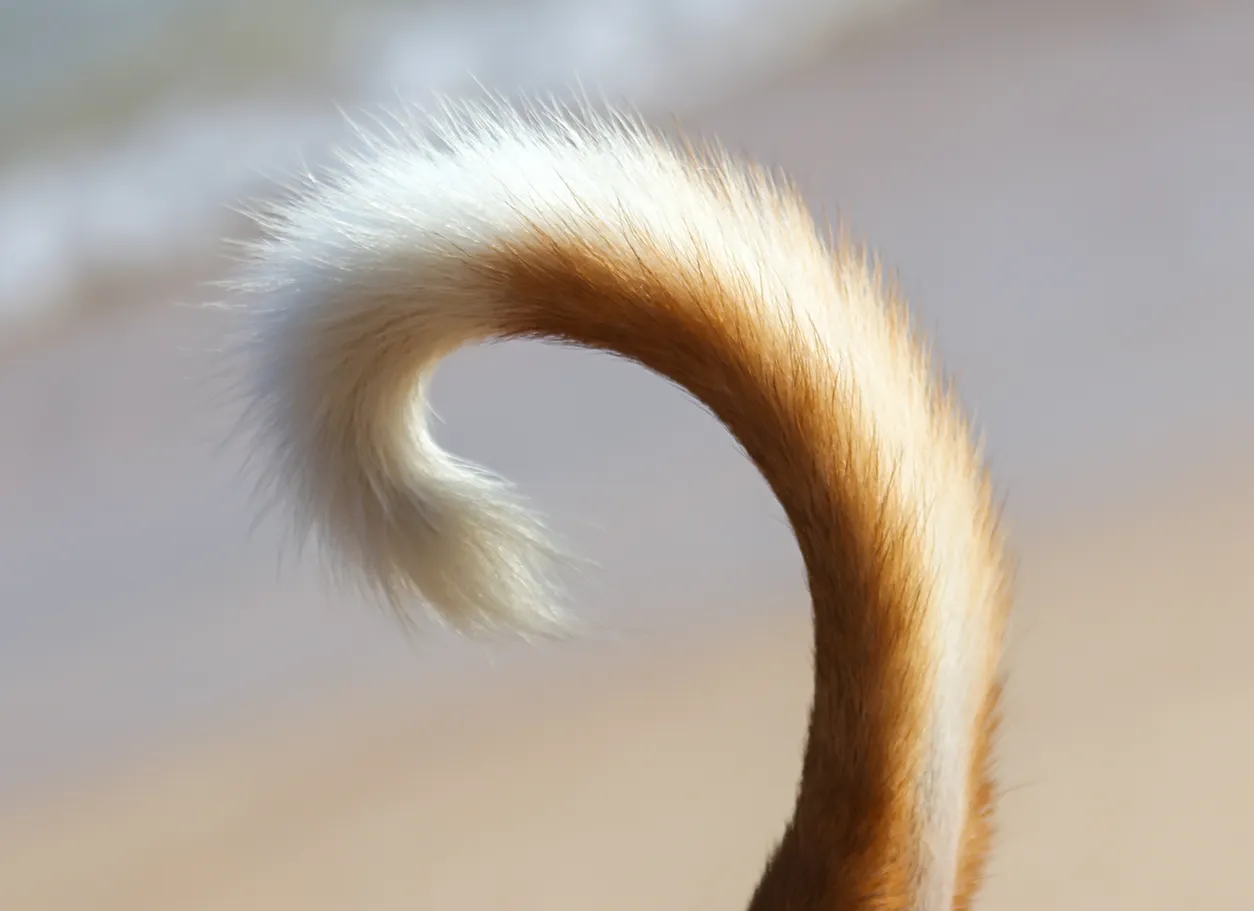
While tail wagging can mean joy, the truth is that a wagging tail is not always a sign of a happy dog. It can also signal nerves, excitement, uncertainty, or ‘please don’t come any closer’. A dog’s tail is less a happiness meter and more a mood flag, constantly broadcasting information to anyone who knows how to read it.
Wagging doesn’t always mean friendly
A loose, sweeping wag that moves the whole back end usually does mean a relaxed, happy dog. The wags will have wide arcs, and the dog shows a soft body and wiggly hips. That’s the gold standard of ‘everything’s fine here’.
But a fast, stiff wag – especially one held high – can mean something very different. Research shows that tight, rapid wagging is often linked to alertness or tension, not friendliness. If the rest of the body looks stiff or still, that wag might be saying, ‘I’m unsure’ or ‘I’m on edge’, rather than ‘come say hello’.
Height matters more than speed
Where a dog holds their tail tells you a lot.
- High tail: alert, confident, or excited.
- Neutral tail: relaxed and comfortable.
- Low or tucked tail: anxious, unsure or fearful.
Dogs who hold their tails high while wagging are often assessing a situation. A tail tucked tightly under the body isn’t shyness – it’s a clear signal of stress. Listening to that signal can prevent bites and misunderstandings.
Left or right?
Here’s where it gets interesting. Studies have found that dogs tend to wag more to the right when feeling positive emotions (like seeing their owner), and more to the left when feeling uneasy or threatened. Other dogs can actually pick up on this difference. In dog terms, that’s emotional body language at a very subtle level.
The whole dog tells the story
A tail never tells the full story on its own. You need to look at the whole picture – ears, eyes, posture and movement. A wagging tail paired with stiff legs, a closed mouth, or hard eyes is more likely a warning signal.
What about tail chasing?
Occasional tail chasing can be normal play, especially in puppies. But frequent spinning or chasing can signal boredom, stress or a lack of mental stimulation. It’s often a sign your dog needs more enrichment.
Understanding tail language helps us respect dogs’ boundaries and avoid putting them in situations they’re not comfortable with. It also helps us recognise joy, confidence and curiosity when we see it.
Next time your dog wags their tail, pause for a second. Look at how they’re standing, how fast that tail is moving, and where it’s positioned. Your dog is talking – and once you know the language, you’ll realise they’ve been talking all along.