By April Butler
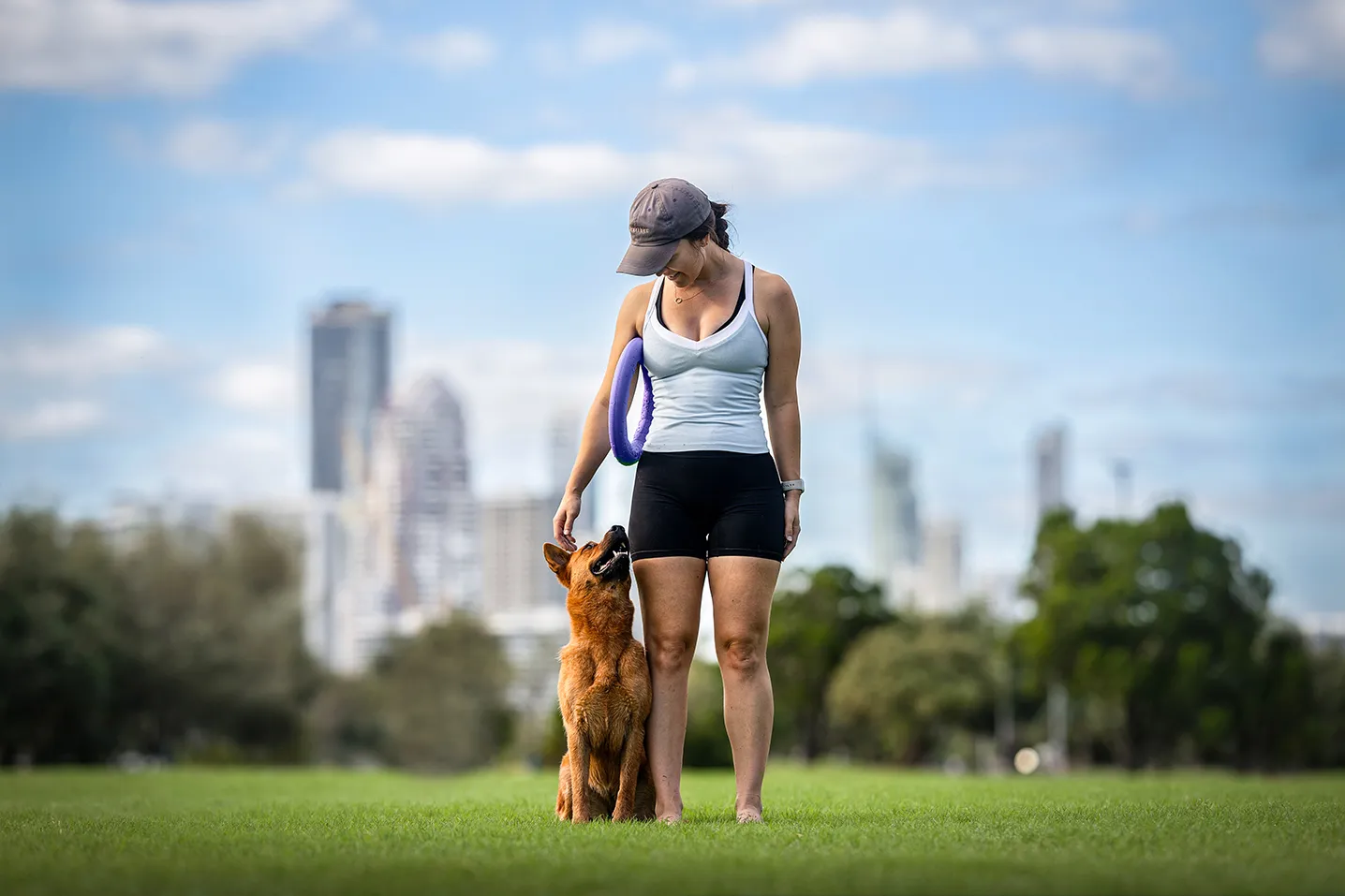
Food is an accessible training tool that is easy to deliver precisely, and works across a huge range of dogs and situations. But through working with my own red heeler, Winnie, it became clear that for many dogs – particularly high-drive working breeds – food isn’t always the most powerful motivator available.
When I got my first dog, I just wanted a well-behaved companion so we could live a full life together. But when Winnie began struggling with some pretty severe reactivity, I was suddenly pushed into the deep end.
I started reading everything I could find – books, podcasts, research, courses. My background is in science, so the behavioural science behind training fascinated me as much as the practical side. What began as trying to help my own dog gradually turned into a deep fascination with how dogs learn, how instinct shapes behaviour, and how we can use drives they were bred with to create fulfilling games and effectively shape their behaviour.
The predatory sequence: what is it?
Many of the ways dogs interact with the world (and their toys) are expressions of instinctive behaviours rooted in the predatory hunting sequence. This chain of motor behaviours evolved in canids to locate, pursue and consume prey. Through selective breeding, different stages of the sequence have been amplified, suppressed or truncated, creating the enormous behavioural variation we see across modern dog breeds today.
The sequence (generally) goes like this:
Search (using their senses to locate prey) → Stalk (slow, deliberate movement toward the target) → Chase (pursuit) → Grab-bite (contact and grip) → Kill-bite (hard bites and shaking) → Dissect → Consume.
Most breeds don’t just look and move differently – they’re behaviourally different at the level of fixed motor patterns.
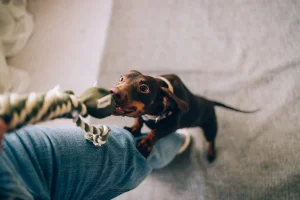
For instance, border collies have an exquisitely developed orient-stalk-chase instinct, with grab-bite and kill-bite largely suppressed, which is precisely what makes them useful for moving sheep. Terriers often retain a powerful kill-bite – that relentless shaking of toys is the same motor pattern that made them effective ratters in the past.
Understanding where your dog’s breed sits in this sequence is the starting point for understanding what they actually desire, and what fills their cup.