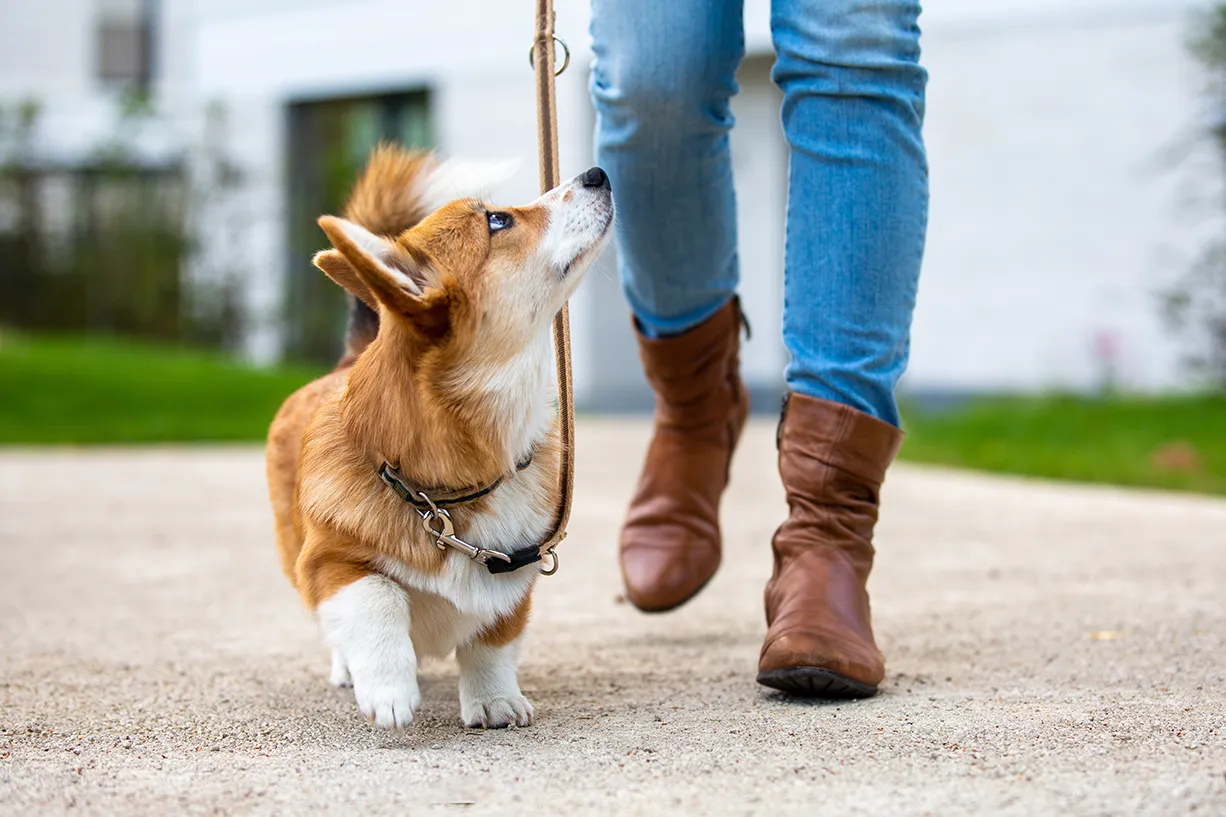
Dogs are constantly reading us – and a walk gives them plenty to work with!
Your dog smells your emotions
Dogs don’t just notice where you walk, they notice how you feel while you’re out and about. Research shows that dogs can detect their human companion’s mood, stress and anxiety levels, just by smell! They can detect changes in the scent of your sweat and pheromones.
If you’re tense, rushed or distracted, your dog probably knows before you say a word. Calm, relaxed walks feel very different to frantic ones, even when the route is the same.
Over time, your dog begins to associate your emotional state with the environment: if you’re relaxed, the outside world feels safe; if you’re stressed, they may start to anticipate danger everywhere.
How you handle the world
Along with your smell, on walks, dogs observe how you respond to the world, including everyday encounters like other dogs, strangers, loud noises, traffic and crowds.
If you freeze, shorten the lead, or pull back when a dog approaches, they notice. If you stay relaxed and steady, that information is recorded, too. Over time, these reactions shape how your dog feels about the world. A confident, calm owner teaches a confident, calm dog; a stressed or reactive owner can inadvertently teach a dog to be anxious.
Walks aren’t just physical
Sniffing, pausing and choosing where to go are mentally enriching for your dog. When you let them stop and sniff, you’re telling them their needs matter. Rushed walks teach dogs that curiosity is discouraged and that their signals will be ignored.
Many behaviourists now recommend ‘sniff walks’ – slower, less structured walks where dogs can explore at their own pace. Even five or 10 minutes of letting your dog follow their nose can reduce stress and provide enrichment equivalent to hours of indoor play
Your relationship is on display
A walk is one of the clearest windows into the human–dog relationship. Dogs learn:
- whether they can trust you to keep them safe
- whether you listen to their signals
- whether the outside world is predictable or stressful.
Walks aren’t just exercise. They’re communication. Every outing teaches your dog something about who you are, how you feel and how safe the world is.
Our dogs are always paying attention – and learning far more than we might realise!