
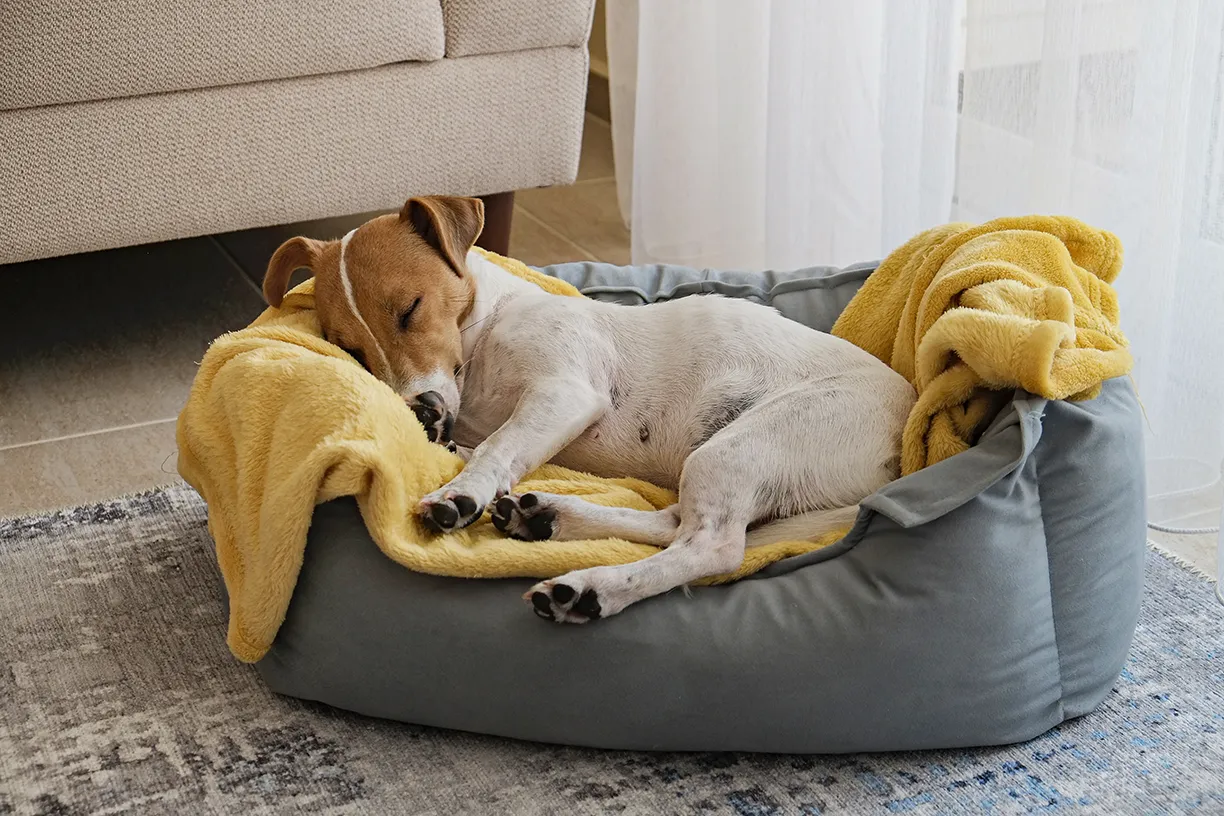
Dogs of all breeds exhibit this behaviour and there are a few good theories for why.
It’s instinct, not random
That circling behaviour is deeply rooted in canine biology and ancient survival strategies. In the wild, dogs’ ancestors would trample long grass and flatten undergrowth before resting in order to create a comfortable sleeping area. Turning in circles is the most efficient way to do this.
Wild dogs have been observed moving sticks and rocks, and in cold climates, repositioning snowbanks.
This behaviour also assists with flushing out insects, spiders and snakes that could be problematic.
Some biologists think wolves sleep with their noses to the wind in order to detect threatening scents quickly – such as those of predators like bears and cougars. Circling before rest allows the wolf to discover the wind direction, sniff for threats and best position themselves. Even though they are not at risk of attack in our homes, domestic dogs retain this evolutionary behaviour.
Circling before sleep also helps our dogs to regulate their temperature – curling up tightly helps dogs stay warm in cold weather, while dogs in hot climates have been observed scratching away topsoil to reveal a cooler sleeping spot.
Lastly, turning in circles before sleep allows the dog to mark the area with their scent, signalling to other dogs and animals that the spot is occupied, giving them a sense of comfort and security.
Interestingly, domestic dogs will often preference circling in a clockwise or ani-clockwise direction, which some researchers think relates to their paw preference – basically, your dog’s dominant paw might dictate the spin direction.
Seeking comfort
While there are a number of scientific explanations for why dogs spin around before sleep, it might also be caused by comfort seeking. Just as we might fluff our pillows before bed, our dogs adjust their beds so they’re just right.
When it’s a problem
If your dog’s circling is obsessive, distressing, or appears painful, consult your vet. Sometimes conditions like arthritis or digestive issues can make it hard for your dog to get comfortable. A vet can help determine if there are issues at play, so your dog’s bedtime can once again be a comforting ritual.
Next time you see your dog do its spin routine, you’ll know your pet isn’t just being dramatic. They’re following their ancient doggy instincts!